You’ve probably seen them buzzing around – those little drones. It turns out they’re not just for taking cool aerial shots of the bach anymore. For plumbers in New Zealand, these flying gadgets, along with some other clever bits of kit, might just be the next big thing in finding pesky leaks. Forget tearing up the lawn or drilling random holes; the future of leak detection could be a lot less disruptive and a lot more high-tech. Let’s look at the new Tools & Tech for Tradies that are changing the game.
Key Takeaways
- Drones are now being used for plumbing inspections, checking roof plumbing and hard-to-reach spots without needing ladders or scaffolding.
- Advanced tools like thermal imaging cameras can spot moisture by detecting temperature changes, and electro-acoustic devices listen for the distinct sounds leaks make.
- Sometimes, traditional methods like listening equipment can lead to mistakes, causing extra digging and costs, especially when dealing with underground services.
- New Zealand’s soil conditions can affect how well tools like Ground Penetrating Radar work, while services like ‘Dial Before You Dig’ help locate underground utilities.
- The science behind leak detection involves understanding how heat moves with moisture, how leaks create specific sounds, and using signals to trace pipes.
The Rise Of Drones In Plumbing Diagnostics
Aerial Surveys For Roof Plumbing Compliance
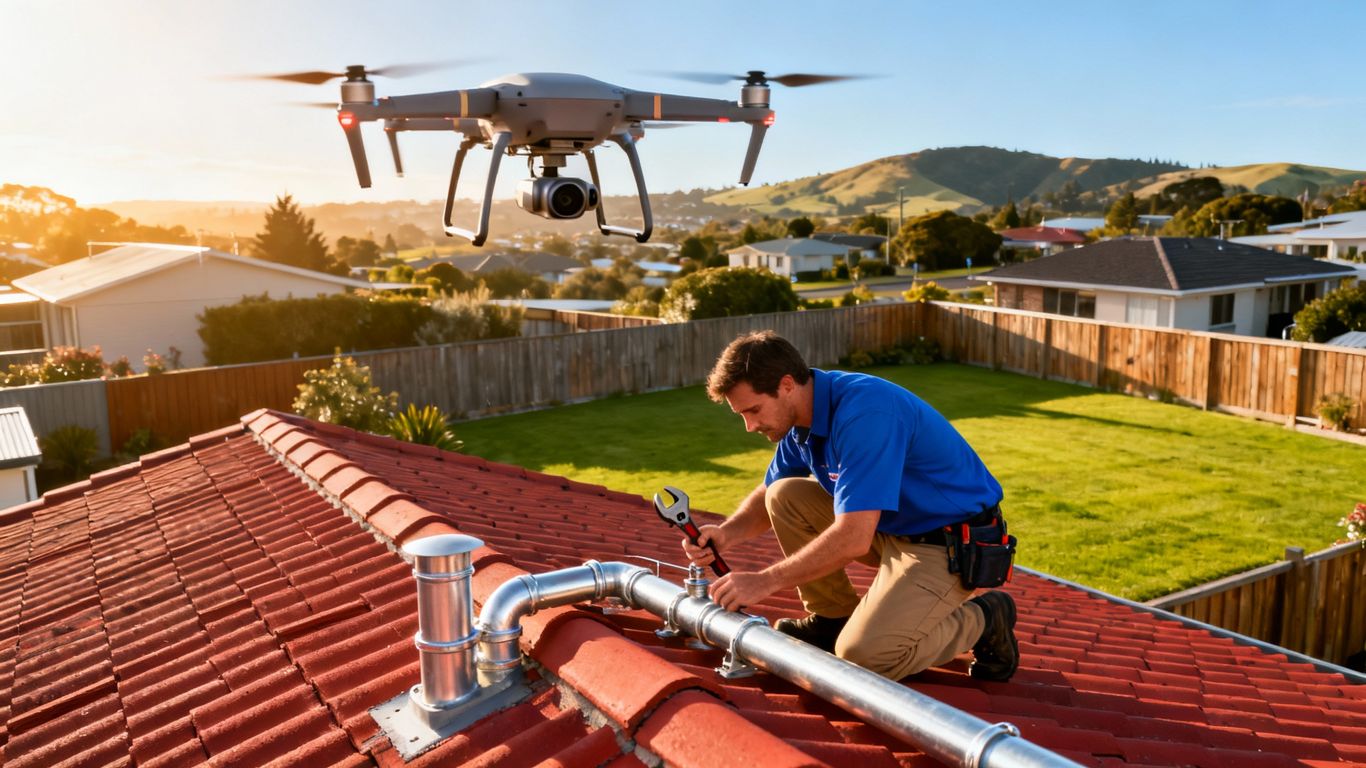
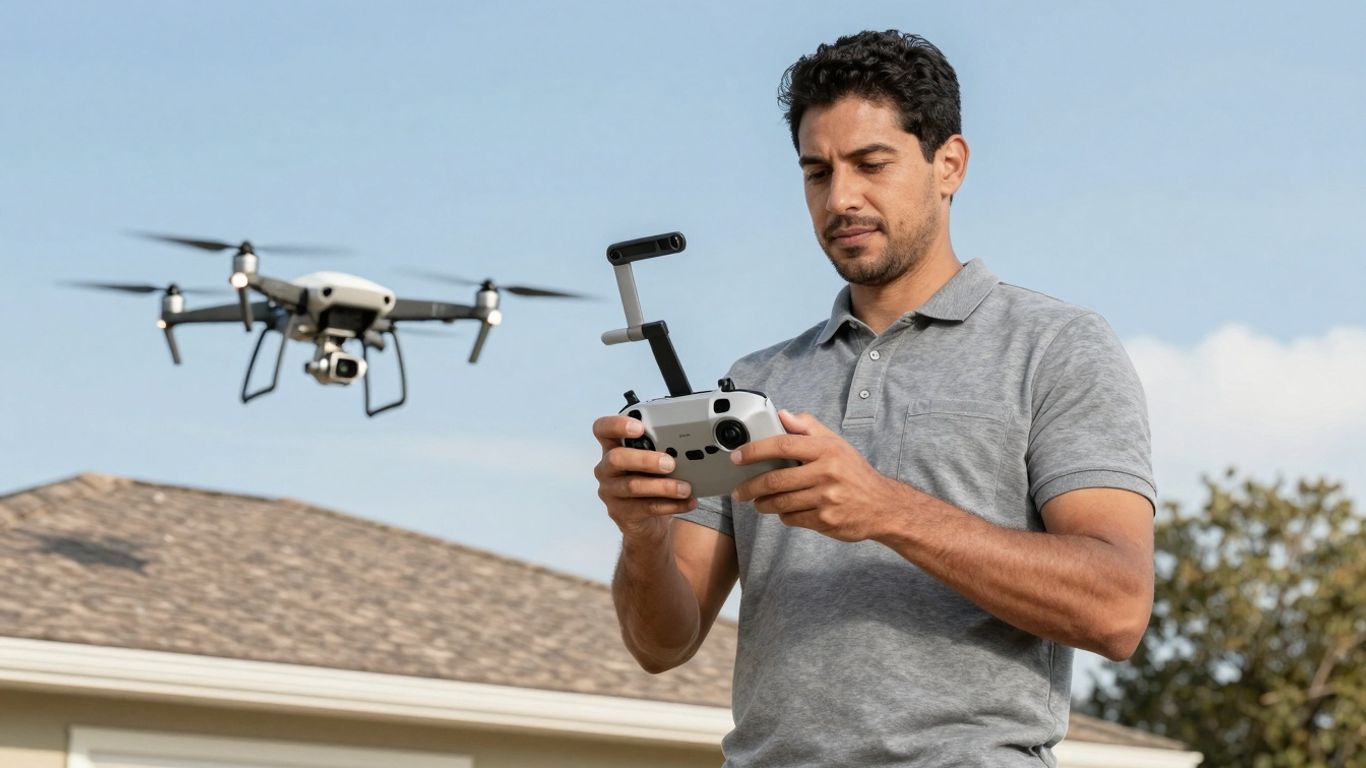
When it comes to roof plumbing, getting a clear picture of the situation can be tricky. Traditional methods often involve risky climbs or guesswork. Drones change this entirely. They provide a safe, bird’s-eye view, letting you check everything from guttering to downpipes without putting yourself in harm’s way. This aerial perspective is invaluable for ensuring your roof plumbing meets all the necessary standards and codes. It’s about getting the job done right, from the start.
Detecting Defects From Above
Think about spotting a cracked tile or a loose fitting on a steep roof. It’s not easy. Drones equipped with high-resolution cameras can zoom in on these details, revealing issues you might otherwise miss. They can identify wear and tear, blockages, or signs of damage that could lead to bigger problems down the line. This early detection saves you time and your client’s money.
Accessing Difficult Areas Safely
Some parts of a building’s plumbing are just plain hard to reach. We’re talking about high-rise buildings, complex roof structures, or areas with limited ground access. Drones can fly right up to these spots, providing clear visuals without the need for expensive scaffolding or dangerous ladder work. This makes inspections quicker, safer, and more thorough for everyone involved.
Advanced Tools & Tech For Tradies
Non-Invasive Leak Detection Methods
When a leak is suspected, the first thought might be to start digging, but that’s rarely the best approach. Modern plumbing diagnostics offer a range of non-invasive techniques that can pinpoint leaks without causing unnecessary damage to your property. These methods rely on detecting subtle changes in the environment caused by escaping water, saving you time and money.
One common technique involves using acoustic sensors. These devices are sensitive enough to pick up the faint sounds of water escaping a pipe, even when it’s buried deep underground. By carefully listening to these sounds, a skilled technician can trace the leak’s origin.
Another approach uses tracer gases. A safe, inert gas is introduced into the pipe system. If there’s a leak, the gas will escape and can be detected at the surface using specialised equipment. This method is particularly effective for identifying very small leaks that might otherwise go unnoticed.
Thermal Imaging For Moisture Detection
Thermal imaging cameras have become a game-changer for detecting hidden moisture. These cameras don’t see water directly, but rather the temperature differences it creates. Water absorbs and releases heat differently than surrounding materials like plaster or wood.
When a pipe leaks, the moisture can spread into walls, floors, or ceilings. A thermal camera can visualise these damp areas as cooler or warmer spots compared to the dry surroundings. This allows for a quick and accurate assessment of the extent of water damage without needing to break open walls.
This technology is invaluable for identifying leaks that aren’t immediately obvious, such as those behind tiles or within insulation. It helps to identify the problem area precisely, minimising the need for destructive investigation and speeding up the repair process.
Electro-Acoustic Technology For Sound Location
Electro-acoustic technology takes sound detection to a more sophisticated level. It combines sensitive microphones with advanced signal processing to isolate and amplify the specific sounds associated with water leaks.
When water escapes a pressurised pipe, it creates a distinct noise. This noise travels through the pipe material and the surrounding ground. By placing acoustic sensors on the ground surface or directly on pipes, technicians can pick up these subtle sounds.
The system then filters out background noise, allowing the technician to pinpoint the exact location of the leak. This is especially useful in noisy environments or when dealing with leaks that produce very faint sounds. It’s a precise way to find leaks without guesswork.
When Traditional Methods Fall Short
While tried-and-true methods have served plumbers for years, they aren’t always the most effective or efficient. Sometimes, you need to look beyond the basics to truly get to the bottom of a problem. Relying solely on older techniques can lead to guesswork, wasted time, and ultimately, a less-than-ideal outcome for your property.
The Pitfalls Of Listening Equipment
Listening devices, like acoustic sensors, are a common tool for detecting leaks. They work by amplifying the sound of escaping water. However, these devices can struggle in noisy environments. Background noise from traffic, appliances, or even other plumbing systems can mask the faint sound of a leak, making it difficult to pinpoint the exact location. This can lead to prolonged investigations and unnecessary disruption.
Interpreting Underground Utility Data
When leaks occur underground, understanding existing utility data is key. However, these records aren’t always up-to-date or entirely accurate. Old plans might not reflect recent changes or repairs. This lack of precise information can make locating underground pipes and potential leak sites a challenge. It’s like trying to navigate with a map that’s missing key roads.
The Cost Of Inaccurate Detection
An inaccurate leak detection can be more than just an inconvenience; it can be costly. If a leak isn’t found quickly, water damage can spread, leading to structural issues and mould growth. This means more extensive and expensive repairs down the line. Furthermore, repeated, unsuccessful attempts to find a leak can rack up labour costs without resolving the core issue. Finding reliable drainlayers in Auckland is important to avoid these issues.
Sometimes, the most advanced technology is needed to overcome the limitations of older methods. It’s about choosing the right tool for the job, especially when dealing with complex plumbing problems.
Exploring New Zealand’s Leak Detection Landscape
Tracer Gas For Finer Leaks
When you’re dealing with leaks that are particularly small, standard methods might not pick them up. This is where tracer gas comes into play. It’s a special gas that’s introduced into your pipe system. Qualified technicians can then use sensitive equipment to detect where this gas is escaping, pinpointing even the most elusive leaks.
This method is quite effective for finding leaks that might otherwise go unnoticed for a long time. It’s a step up from just listening for sounds, offering a more direct way to find the problem, especially in complex pipe networks.
Ground Penetrating Radar In NZ Soils
New Zealand’s soil conditions can be varied, and sometimes you need a way to ‘see’ underground without digging. Ground Penetrating Radar (GPR) is a technology that uses radar pulses to image the subsurface. It can help locate buried pipes and identify anomalies, which can sometimes indicate a leak or a structural issue.
While not strictly a leak detection tool itself, GPR is invaluable for understanding what’s beneath the surface. This helps in planning any necessary excavation or repair work, avoiding accidental damage to other utilities.
The ‘Dial Before You Dig’ Service
Before any significant work is done on your property, especially involving digging, it’s wise to use services like ‘Dial Before You Dig’. This is a free service that provides information on the location of underground utilities, such as water pipes, gas lines, and electrical cables.
Knowing where these services are located is vital for safety and to prevent costly damage. It’s a simple step that can save a lot of trouble and expense down the line, forming part of a responsible approach to property maintenance and repair.
Understanding the underground landscape is as important as understanding what’s above ground when it comes to plumbing. Services like ‘Dial Before You Dig’ are there to help prevent accidents and ensure work proceeds smoothly.
Understanding The Science Behind Detection
How Thermal Cameras Visualize Water’s Impact
Thermal imaging cameras work by detecting infrared radiation, which is essentially heat. Water, especially when it’s been sitting for a while or is actively leaking, often has a different temperature than its surroundings. This temperature difference is what the camera picks up.
Think of it like this: a damp patch on a wall will usually be cooler than the dry plaster around it because of evaporation. A thermal camera can see this subtle temperature variation, making it a powerful tool for spotting hidden moisture before it causes significant damage. It’s a non-invasive way to get a visual clue about what’s happening beneath the surface.
Acoustic Emission For Leak Sounds
When water escapes a pipe under pressure, it creates a distinct sound. This sound travels through the pipe material and the surrounding soil. Acoustic detection equipment is designed to pick up these faint noises. It’s a bit like listening for a whisper in a quiet room, but with specialised gear.
These devices often use sensitive microphones or sensors placed on the pipe or ground. They can differentiate the leak sound from background noise. The frequency and intensity of the sound can even give clues about the size and type of leak. This method is particularly effective for underground pipes where visual inspection is impossible.
The Role Of Electromagnetic Signals
Many underground utilities, like water pipes and power cables, are made of metal. These metallic services can carry electrical currents. When an alternating current flows through a cable, it emits a weak electromagnetic field. Specialised detectors can pick up these fields.
This is often referred to as passive detection, as it relies on existing signals. However, if a pipe or cable isn’t carrying a strong enough signal, a transmitter can be used to energise it actively. This makes it easier for the detector to pinpoint its location. It’s a bit like giving the pipe a temporary ‘voice’ so you can find it. You can find more information on utility detection methods.
The Future Of Property Maintenance
Minimising Property Damage During Detection
When you need to find a leak, the last thing you want is for the detection process itself to cause more problems. Traditional methods can sometimes involve a bit of guesswork, leading to unnecessary digging or cutting into walls. This can mean more time and expense to fix the damage caused by the investigation, not just the leak itself.
Newer techniques, like those using drones with thermal imaging or acoustic sensors, are designed to be much less intrusive. They allow us to pinpoint the source of a leak with remarkable accuracy, often without needing to disturb your property at all. This focus on non-invasive methods is a game-changer for property owners.
Drone Inspections As A Cost-Effective Solution
While the initial thought of using drone technology might suggest a higher cost, it often proves to be more economical in the long run. Think about the expenses associated with traditional leak detection: scaffolding, extensive exploratory digging, and the subsequent repairs to walls or floors. Drones bypass many of these costly steps.
Their ability to quickly survey large or difficult-to-access areas, like roofs or complex pipe networks, means less labour time and fewer specialised access requirements. This efficiency translates directly into savings for you, the property owner, making it a smart investment for maintaining your home or business.
Integrating New Tech Into Tradie Toolkits
As plumbers and tradespeople, we’re always looking for ways to do a better job for you. Embracing new technologies isn’t just about having the latest gadgets; it’s about improving accuracy, speed, and reliability. Integrating tools like drones and advanced sensors into our standard practice means we can offer a superior service.
This evolution means we can tackle problems more effectively and with less disruption. It’s about staying ahead of the curve and ensuring that when you call us, you’re getting the most advanced and efficient solution available for your plumbing needs. We see this as a natural progression in providing top-notch property maintenance.
So, where does this leave us?
Look, it’s clear that drones aren’t going to replace your trusty plumber overnight. They’re a tool, a pretty clever one at that, for getting a bird’s-eye view of things that are usually a pain to get to. For spotting roof leaks or checking out hard-to-reach pipes, they could make a real difference, saving you time and maybe even a bit of hassle. But when it comes down to actually fixing the problem, you’ll still need someone with the right tools and know-how. Think of it as a new way to get a clearer picture of what’s going on, a bit like using a thermal camera to see where the heat’s escaping. It’s an interesting development, and one worth keeping an eye on as the technology gets better and more accessible for tradies across Aotearoa.