You’ve probably got an Aircon & Heat Pump system humming away, keeping your place toasty in winter and cool in summer. It seems pretty straightforward, right? You set it and forget it. But what if that simple setting is actually costing you a fortune and creating a damp, mouldy mess? It turns out, fiddling with your Aircon & Heat Pump settings, or just leaving them on the wrong one, can lead to more than just a bigger power bill. We’re going to look at how you might be accidentally making things worse, and what you can do about it.
Key Takeaways
- Your Aircon & Heat Pump settings matter more than you think; constantly changing them can waste energy and money.
- Incorrect settings can lead to mould growth and create an unhealthy environment in your home.
- Overheating your home or ignoring airflow can make your Aircon & Heat Pump work harder than it needs to, draining power.
- Proper sizing and regular maintenance are vital for your Aircon & Heat Pump to run efficiently and avoid costly repairs.
- Smart usage, consistent temperatures, and considering your home’s fabric can significantly reduce bills and boost comfort.
Understanding Your Aircon & Heat Pump Settings
The Myth of ‘Set And Forget’
Many people think that once their air conditioning or heat pump is installed, they can just set it and forget it. While modern systems are designed to be user-friendly, this approach often leads to inefficiency and discomfort. Your settings play a much bigger role than you might realise in how well your system performs.
Treating your heat pump like a simple on/off switch misses out on its potential. These systems are sophisticated and can be programmed to work smarter, not harder. Ignoring the settings means you’re likely not getting the most out of your investment, potentially costing you more in energy bills and leading to other issues.
Why Constant Fiddling Wastes Energy
Constantly adjusting your thermostat might feel like you’re optimising comfort, but it often has the opposite effect. Every time you make a significant change, the system has to work harder to reach the new target temperature. This constant back-and-forth is a major energy drain.
Think of it like driving a car. Slamming on the brakes and then flooring the accelerator repeatedly uses far more fuel than maintaining a steady speed. Your heat pump works similarly; frequent, large temperature adjustments lead to inefficient operation and higher energy consumption.
Optimising Your Aircon & Heat Pump For Comfort
Getting the most out of your heat pump involves understanding how to use its settings effectively. Instead of drastic changes, aim for consistent, moderate temperatures. Many systems allow for scheduling, which can be programmed to match your daily routine.
Consider setting a comfortable baseline temperature and letting the system maintain it. This avoids the energy spikes associated with constant adjustments. For example, setting your system to a consistent 20°C might be more efficient and comfortable than fluctuating between 18°C and 22°C throughout the day.
Using your heat pump’s smart features, like scheduling and zone control, can significantly improve comfort and reduce energy waste. It’s about working with the system, not against it, to create a consistently pleasant home environment.
The Hidden Costs Of Incorrect Aircon & Heat Pump Use
How Incorrect Settings Lead To Mould Growth
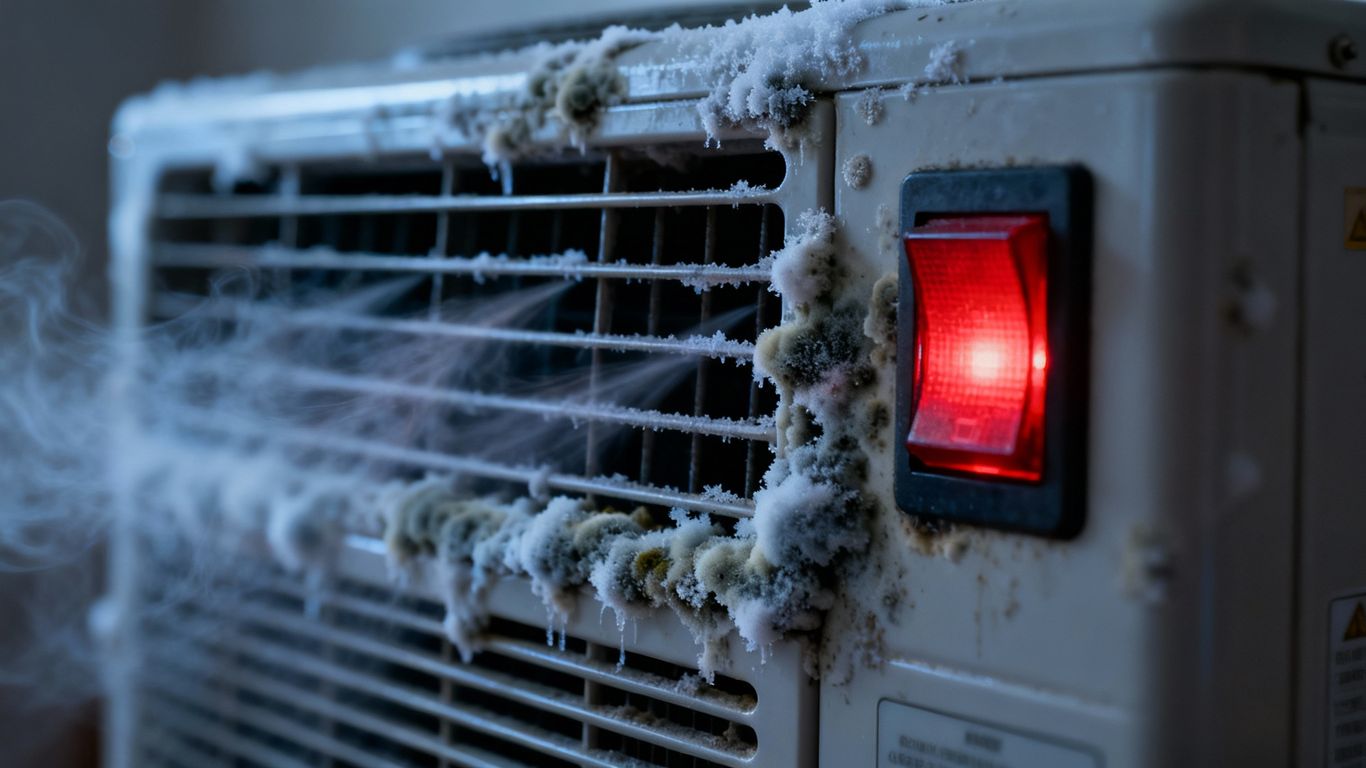
Using your heat pump incorrectly can create the perfect environment for mould. When you constantly adjust the temperature or use the wrong settings, you might be inadvertently increasing humidity levels inside your home. This excess moisture, especially in poorly ventilated areas, provides a breeding ground for mould spores.
Mould isn’t just unsightly; it can also pose serious health risks and damage your home’s structure. Ignoring condensation on windows or walls is a clear sign that humidity is too high. This often happens when the system is working too hard or not running efficiently, failing to properly dehumidify the air.
The Energy Drain Of Inefficient Operation
When your heat pump isn’t set up correctly, it’s essentially working overtime for no good reason. This means it’s using far more electricity than it needs to. Think of it like driving your car everywhere in first gear – it gets you there, but it’s incredibly wasteful and puts a lot of strain on the engine.
An inefficient system will run for longer periods, cycling on and off more frequently. This constant activity not only hikes up your energy bills but also puts unnecessary wear and tear on the unit’s components. Over time, this can lead to a shorter lifespan for your expensive appliance.
Unexpected Repair Bills From Misuse
Pushing your heat pump to operate inefficiently due to incorrect settings or poor maintenance is a fast track to expensive repairs. When a system is constantly struggling to reach or maintain a temperature, components like the compressor or fan motor are put under immense pressure.
This excessive strain can cause parts to fail prematurely. A simple issue like a clogged filter, often overlooked, can force the entire system to work harder, leading to breakdowns. Regular checks and correct usage are far cheaper than emergency call-outs.
Here’s a look at how common issues can escalate:
- Blocked Filters: Restrict airflow, making the unit work harder and consume more energy.
- Incorrect Thermostat Use: Constant adjustments confuse the system, leading to inefficient cycles and potential overheating.
- Poor Airflow: Obstructions around indoor or outdoor units prevent effective heat exchange, reducing efficiency and stressing components.
A heat pump that’s constantly running inefficiently due to incorrect settings or poor maintenance is a ticking time bomb for expensive repairs. It’s like ignoring a small leak in your roof; it might seem minor now, but it can lead to significant water damage and costly fixes down the line.
Common Aircon & Heat Pump Mistakes To Avoid
Overheating Your Home With The Wrong Mode
It might seem obvious, but many people still get caught out by the different modes on their air conditioning or heat pump. Using the ‘cool’ setting when you actually want to heat your home, or vice versa, means the system is working against itself. This isn’t just a waste of electricity; it can also put unnecessary strain on the unit.
Always double-check that you’ve selected the correct mode for the season. If you’re unsure, consult your unit’s manual or give us a call. Getting this right from the start means your system can do its job efficiently, keeping you comfortable without burning through your budget.
Ignoring Airflow For Optimal Performance
Airflow is the lifeblood of any air conditioning or heat pump system. If the vents are blocked by furniture, curtains, or anything else, the conditioned air can’t circulate properly around your home. This forces the system to work harder and longer to reach the desired temperature.
Think of it like trying to breathe through a blocked nose – it’s difficult and inefficient. Ensure that all indoor unit vents and outdoor unit grilles are kept clear of obstructions. This simple step can make a significant difference to performance and energy use.
The Impact Of Thermostat Mismanagement
Your thermostat is the brain of your system, but it needs to be managed correctly. Constantly adjusting the temperature up and down is a common mistake that wastes energy. The system has to work overtime to keep up with these frequent changes.
It’s far more efficient to set your thermostat to a comfortable, consistent temperature and let the system maintain it. Avoid drastic temperature swings. If you’re going away for an extended period, set it to an energy-saving mode rather than turning it off completely, as restarting can use more power.
Here are some common thermostat errors:
- Setting it too high in summer or too low in winter: This makes the unit run excessively.
- Placing heat-generating appliances near the thermostat: This can trick the thermostat into thinking the room is warmer than it is.
- Not programming a schedule: If your thermostat allows it, use the programming features to automatically adjust temperatures when you’re asleep or out.
A thermostat that’s not functioning correctly, or is poorly positioned, can lead to significant energy waste and discomfort. It might be misreading the room temperature, causing your unit to run unnecessarily or not at all. This can also contribute to mould growth if the system isn’t dehumidifying properly.
Maximising Efficiency With Your Aircon & Heat Pump
Correct Sizing For Your Home’s Needs
Getting the size of your heat pump just right is really important. If it’s too small, it’ll run all the time trying to reach the temperature you want, but it just won’t manage. This constant running is inefficient and puts a strain on the system.
On the flip side, a unit that’s too big will switch on and off too frequently. This short-cycling wastes energy and doesn’t effectively remove moisture from the air, which can lead to a damp feeling in your home. Proper sizing ensures consistent comfort and optimal energy use.
The Importance Of Professional Installation
Even the best heat pump won’t perform well if it’s not installed correctly. Professionals consider factors like your home’s layout, insulation levels, and even the direction it faces to determine the ideal placement and configuration.
This careful planning means the system can work with your home’s natural characteristics, rather than against them. A good installation minimises energy loss and maximises the heat pump’s ability to heat or cool your space efficiently.
Regular Maintenance For Peak Performance
Think of regular maintenance like a service for your car. It keeps everything running smoothly and helps catch small issues before they become big problems. Dirty filters, for instance, restrict airflow, making the system work harder and use more electricity.
Cleaning coils and checking refrigerant levels are also key. These tasks help the heat pump operate at its best, saving you money on energy bills and preventing unexpected breakdowns. It’s a simple way to protect your investment and keep your home comfortable.
Aircon & Heat Pump Myths Debunked
Do They Really Work In Colder Climates?
It’s a common worry, isn’t it? You might think that when the temperature drops significantly, your heat pump will simply give up the ghost. However, this is largely a myth. Modern heat pumps, especially air-source models, are designed to extract heat from the outside air, even when it’s quite cold. The physics behind it means they can still operate effectively, though their efficiency might reduce slightly compared to warmer days. They are not rendered useless by a bit of frost.
Can Older Homes Benefit From Aircon & Heat Pumps?
Another persistent idea is that older, perhaps less insulated homes are unsuitable for heat pumps. This isn’t necessarily true. While a well-insulated home will always perform better, heat pumps can still be a viable option for older properties. The key is proper sizing and installation, and sometimes, a few targeted upgrades like improving loft insulation can make a big difference. It’s not about needing a complete overhaul to ‘Passivhaus’ standards for them to work.
The Truth About Noise Levels
People often imagine heat pumps as being as noisy as a traditional air conditioning unit. While there is an outdoor unit that makes some sound, modern heat pumps are considerably quieter than older models. Manufacturers have made significant improvements in design to reduce noise. For most homes, the sound is unlikely to be a disturbance, especially when compared to the hum of other household appliances or traffic noise.
It’s worth remembering that the effectiveness and efficiency of any heat pump system, especially in older homes or colder weather, relies heavily on correct installation and system design. A poorly fitted unit will struggle, regardless of the property’s age or the outside temperature.
Achieving A Comfortable Home With Aircon & Heat Pumps
Consistent Temperature For Cosiness
Getting your heat pump set up correctly is key to a consistently comfortable home. Unlike older heating systems that might blast heat and then shut off, leaving you with fluctuating temperatures, a well-managed heat pump maintains a steady warmth. This means no more chilly spots or sudden bursts of heat. The goal is a gentle, continuous comfort that makes your home feel truly cosy, all the time.
This steady approach also helps prevent that common issue of constantly fiddling with the thermostat. When your home is reliably warm, you’re less likely to make adjustments. It’s about setting it and letting the system do its job efficiently, providing a stable environment without you having to think about it.
Reducing Bills Through Smart Usage
When your heat pump runs consistently at a sensible temperature, rather than rapidly heating and cooling, it actually uses less energy. Think of it like driving a car; constant acceleration and braking uses more fuel than a smooth, steady speed. The same principle applies here.
By avoiding the temptation to crank the heating up high when it’s a bit chilly and then turning it down low when it’s warm, you prevent the system from working harder than it needs to. This behavioural change, letting the system maintain a preferred, moderate temperature, can lead to noticeable savings on your electricity bills.
A common misconception is that heat pumps are only effective in brand new, highly insulated homes. This simply isn’t true. While good insulation always helps, modern heat pumps are very capable of providing comfortable warmth even in older properties, especially when paired with sensible usage habits.
The Role Of Fabric Measures
While heat pumps are incredibly efficient, they work best when your home is also performing well. This is where ‘fabric measures’ come in – things like improving insulation in your walls, loft, and floors, and ensuring your windows are well-sealed. These measures reduce the amount of heat your home loses in the first place.
When your home retains heat better, your heat pump doesn’t have to work as hard or run as often to maintain your desired temperature. This means even lower energy bills and a more comfortable living space. It’s a partnership: the heat pump provides the heat, and good fabric measures keep it in.
So, What’s the Takeaway?
It’s clear that fiddling with your heat pump settings can lead to more than just a higher electricity bill. Getting it wrong can invite damp and mould into your home, which nobody wants. Remember, these systems are designed to work efficiently when set correctly and left to do their job. Resist the urge to constantly tweak the temperature or modes. Instead, trust the programmed settings or consult your installer if you’re unsure. A little bit of understanding and the right approach can save you money, keep your home comfortable, and crucially, prevent those unwelcome mouldy surprises.